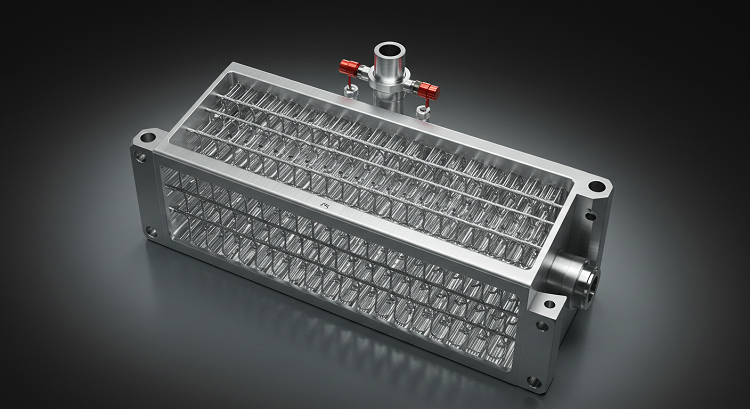
Energy recovery systems are now essential in modern HVAC systems, helping buildings reduce the amount of energy consumed while reaping the benefits of the best indoor air quality. Among all the technologies employed, microchannel heat exchangers are especially remarkable for their higher efficiency in thermal energy transfer between air streams or fluid loops. Their larger surface-to-volume ratio and improved heat transfer characteristics render them very handy to apply in energy recovery ventilation (ERV) units as well as heat recovery chillers.
Table of Contents
How Microchannel Technology Improves Energy Recovery
Microchannel heat exchangers’ distinctive design is one factor in their performance in energy recovery. Unlike the more standard fin-and-tube construction, microchannel heat exchangers have many narrow, flat channels that provide a huge surface area for the exchange of heat in a small space. The design has the following benefits:
- Increased efficiency of heat transfer as the flow of air over the channels is minimized
- Decreased air-side pressure drop, which reduces the energy requirements for fans
- Smaller physical size for easier integration with already installed systems
- Lower refrigerant charge in microchannel water coil system applications
Microchannel heat exchangers are capable of recovering up to 70% of thermal energy from exhaust air streams in air-to-air energy recovery systems. The recovered energy preconditions fresh air entering the system, which reduces heating and cooling equipment loads significantly. It is most efficient in hospitals, commercial buildings, and data centers where ventilation requirements are high.
Microchannel heat exchangers are also used extensively in energy recovery systems. An example of one use is with water coil elements to create hybrid systems that can recover sensible and latent heat. Microchannel heat exchangers in such systems have been known to:
- Increase energy recovery rates by 30-50% compared to standard configurations
- Enhance humidity control in highly seasonal climates applications
- Minimize frost buildup during winter operation through optimized surface temperature
Another growing application is in the integration of microchannel heat exchangers with heat pump systems. There, they are used as evaporators or condensers, depending on operation mode. With this dual functionality, a building can recover waste heat from exhaust air or process cooling systems and reuse it for domestic hot water production or space heating.
The durability of aluminum microchannel construction ensures reliable operation in such harsh environments. Well-kept systems even survive 15+ years with almost zero efficiency loss, making them a worthwhile investment for energy-savvy building owners. Advances in anti-corrosion and hydrophilic coatings have even extended their service lives in aggressive conditions.
Conclusion
Microchannel heat exchangers represent a significant step ahead for energy recovery technology, offering building owners a strong avenue of reducing energy costs and improving system efficiency. Their small size, high efficiency, and compatibility with water coil accessories make them extremely versatile in a broad spectrum of HVAC applications. With tightening energy codes and growing sustainability goals, these heat exchangers will become ever more an integral component of modern mechanical systems.
Facilities that are considering energy recovery possibilities should consider microchannel technology on the basis of established performance and long-term reliability. Specified and installed properly, such systems can offer significant energy savings without sacrificing superior indoor environmental quality throughout their life cycle.